Overloads are one of the most effective ways to break down a defense. Whether it’s a 2v1 wide, a 3v2 in midfield, or a quick counter attack, the goal is simple: create a numerical advantage and use it before the defense recovers.
These drills help players recognize overloads, make better decisions, and turn advantages into real chances.
Core Principles
- Create the advantage to movement and support angles
- Use it quickly, take advantage and don’t let defenders reset
- Commit the defender and force a decision
- React to transitions fast, remember, overloads don’t last
Key Coaching Points
Attacking (Using the Overload)
- Fix the defender and draw them in before passing
- Use the spare player for simple, effective decisions
- Play forward when possible, don’t waste the advantage
- Support immediately, stay connected to the play
Defending (Against the Overload)
- Delay, don’t dive in, delay and buy time for recovery
- Protect central space and try force play wide
- Communicate early and organize quickly
- Track runners so you don’t allow free players
Overload SSG
Objective: Create space and exploit overloads through well-timed support runs, while reacting quickly in transition when possession is lost.
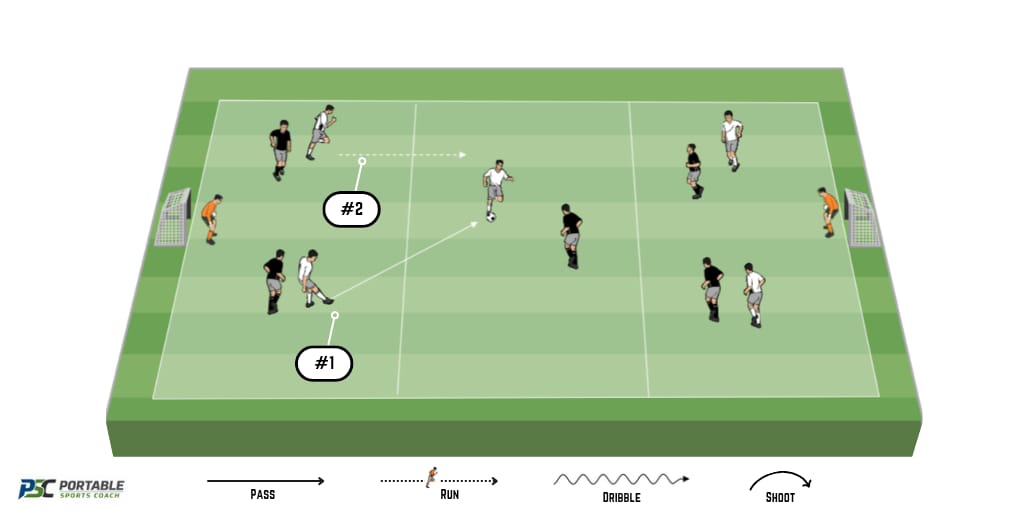
Setup
- Players: 10 outfield players + 2 goalkeepers
- Area: small-sided pitch split into 3 zones.
- Equipment: Balls, cones, 2 goals
- Start position:
- 2v2 in each end zone
- 1v1 in the middle zone
- Play starts with a goalkeeper
Instructions
- 1. Goalkeeper starts play by passing into their defensive zone (2v2)
- 2. Players must stay in their zones initially
- 3. Once a player passes into the middle zone (1v1), the teammate who did NOT pass the ball can break forward to support, creating a 2v1 overload
- 4. Play continues into the final zone, where the supporting player (the player who did NOT pass the ball) joins again, creating a 3v2 overload in attack
- 5. If the defending team wins the ball, they attack in the opposite direction usingh the same rules
- 6. Players who move out of their zone must recover quickly to defend
Coaching Points
- Attacking:
- Time your support run, arrive as the pass is played not too early
- Exploit the free player, don’t ignore the overload
- Play forward quickly as the advantage disappears if you slow it down
- Commit the defenders to force decisions before releasing the ball
- Defending:
- Delay the attack to buy time for recovery runs
- Protect the central space and force play away from the danger
- Recover quickly, sprint back into your zone
- Communicate and organize under pressure
Progressions
- Limit touches in middle zone: Speeds up decision making and forces quicker overload use
- Add a time to score: Encourages fast attacking play
- Increase numbers (3v3 – 2v2 – 3v3): Creates more complex overload decisions
- Condition goals (must use overload player): Reinforces the purpose of the drill
2v1 Overload
Objective: Train attackers to recognize and exploit 2v1 situations quickly before defender can recover
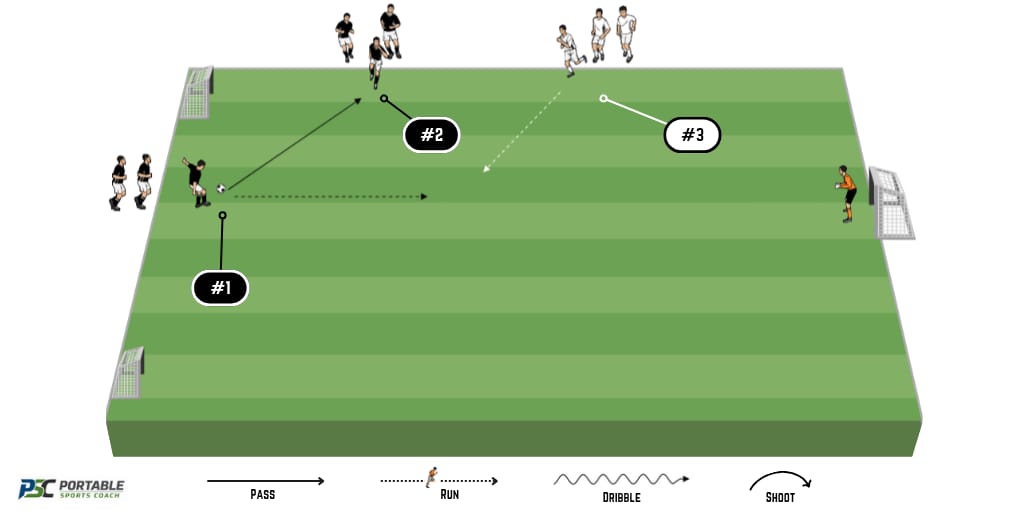
Setup
- Players: 9+ (3 central + 3 wide attackers + 3 defenders)
- Area: Small-side pitch 1 one main goal + 2 mini goals at the opposite end.
- Equipment: Balls, cones, 2 mini goals, 1 full goal
- Start position:
- 3 attackers between the two goals
- 3 attackers lined up wide (one side)
- 3 defenders lined up parallel to the wide attackers
Instructions
- 1. Central attackers start with the ball between the mini goals
- 2. They pass the ball into one of the wide attackers
- 3. One the pass, the 2 attackers break forward to attack the main goal
- 4. At the same time, 1 defender enters to create a 2v1 situation
- 5. Attackers attempt to score quickly
- 6. Once play ends, reset and rotate roles
Coaching Points
- Attacking:
- Commit the defender and force them to choose
- Use the spare player to execute a simple pass at the right moment
- Attack with speed and don’t let the defender recover
- Angle of support to create clear passing lanes
- Defending:
- Delay the attack to slow them down
- Force them wide to reduce scoring angles
- Stay patient and don’t dive in too early
- Protect goal side to block direct route to goal
Progressions
- Change defender starting position: Position behind main goal, to increase the difficulty for attackers
- Start from different angles: Vary everyone’s starting position
- Add recover defender: After a set time allow recovery defender to arrive
- Condition finish: (1-touch) to increase pressure
Rotating Overload SSG
Objective: Train players to recognize and adapt to different overload situations in a fast, game-like environment.
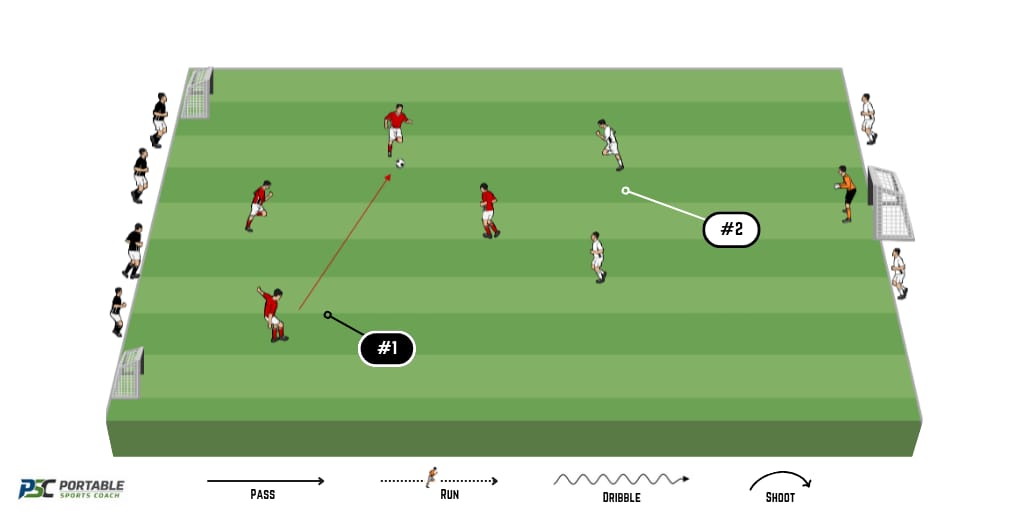
Setup
- Players: 12 (3 teams of 4)
- Area: Small-sided pitch with 1 main goal + 2 mini goals opposite
- Equipment: Balls, cones, 2 mini goals, 1 full goal
- Start position:
- 1 team of 4 attackers starts at mini goal end
- 2 defenders start near main goal
- Remaining players wait off pitch ready to rotate
Instructions
- 1. Play starts with 4 attackers vs 2 defenders.
- 2. Attackers attempt to score in the main goal.
- 3. Defenders aim to win the ball and clear or counter.
- 4. After each round:
- Rotate defenders (next 2 step in)
- Swap attacking team (new 4 enter)
- 5. Continue rotating to keep intensity high.
Coaching Points
- Attacking
- Use the extra player to create clear passing options
- Move the ball quickly and don’t allow recovery
- Create angles to stretch the defenders
- Finish efficiently to take advantage early
- Defending
- Delay and contain to slow the attack
- Protect central areas and force wide
- Work together to stay compact
- Win moments, not everything, be selective
Progressions
- 4v3 / 3v4 / 2v4: vary overload and underload situations to match real game scenarios
- Add time limit: forces quicker attacks and help increase tempo
- Counter goals in mini goals: reward defenders with additional options for goals, and potentially 2 points for every goal.
2v1 Overload with Neutral Player
Objective: Develop decision-making and movement in overload situations, using neutral players to maintain possession and create scoring opportunities.
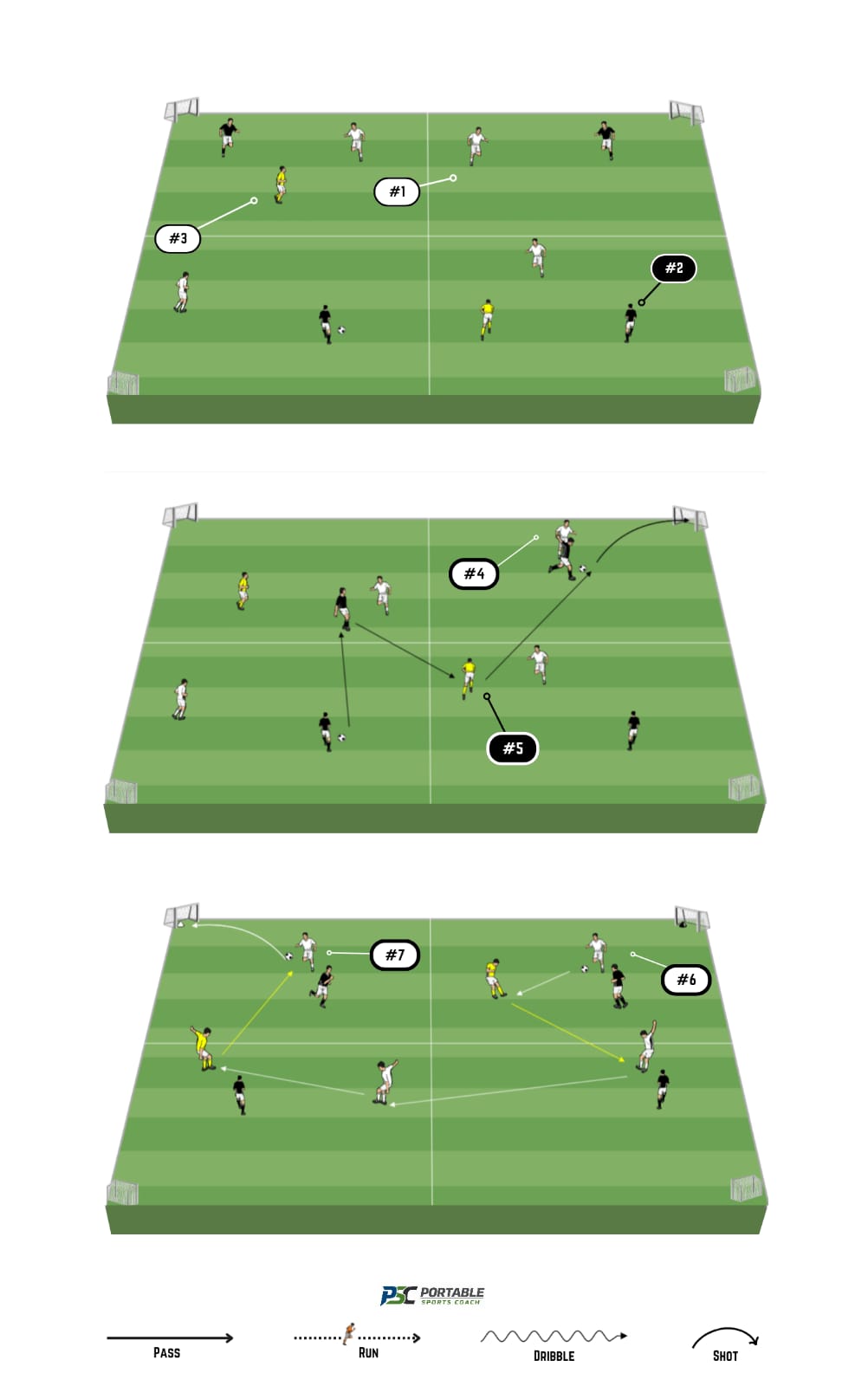
Setup
- Players: 10 players+
- Area: Square pitch split into 4 equal zones
- Equipment: Balls, cones, 4 mini goals (one in each corner)
- Start position:
- 1v1 in two opposite zones
- 1v1 + neutral player in the other two zones
- Neutral players support the attacking team
Instructions
- 1. Play starts in a 1v1 zone.
- 2. Attacker passes into an adjacent zone with a neutral player to creates a 2v1 overload.
- 3. Attacking team combines to keep possession and progress play.
- 4. Ball is then played into another zone to create a new overload.
- 5. Final action leads into a 1v1 in the end zone for a shot on goal.
- 6. If defenders win the ball, they become the attacking team and neutral players switch sides.
Coaching Points
- Attacking
- Use the neutral player to create simple overloads
- Move the ball quickly to stay ahead of defenders
- Support angles to always offer an option
- Be patient and don’t force the final action
- Defending
- Delay play and slow down progression
- Stay goal side to protect the scoring path
- Anticipate passes and read the overload
- React quickly on turnover to switch roles fast
Progressions
- Remove zone restrictions: increases realism and decision-making
- Limit touches: speeds up play
- Add scoring conditions: must combine before finishing
- Add second defender in zones: creates 2v2 or 3v2 variations
- Time limit to score: forces quicker decisions