
By the time players reach the U6 age group, they’re beginning to develop greater confidence with the ball and a better understanding of how soccer is played.
While fun should still be the primary focus, U6 players are often ready for slightly more challenging activities that encourage competition, decision-making and interaction with teammates. This is the age where players start moving beyond simply dribbling a ball and begin learning how to react to opponents, work with others and solve simple problems on the field.
The best U6 soccer drills continue to provide plenty of touches on the ball while introducing new challenges in a safe and enjoyable environment.
Over the years I’ve found that successful U6 training sessions typically focus on:
- Developing ball control under pressure
- Encouraging movement and coordination
- Introducing simple competition
- Building confidence through repetition
- Helping players interact with teammates and opponents
At this age, players are still learning the fundamentals of the game. Sessions should remain fast-paced, engaging and easy to understand, with an emphasis on participation rather than perfection.
The drills below have been selected specifically for U6 players and provide the ideal balance between skill development, enjoyment and early game understanding.
Remember, the goal isn’t to create finished soccer players.
It’s to create confident young athletes who are excited to learn, compete and keep coming back to the field every week.
Individual Ball Control
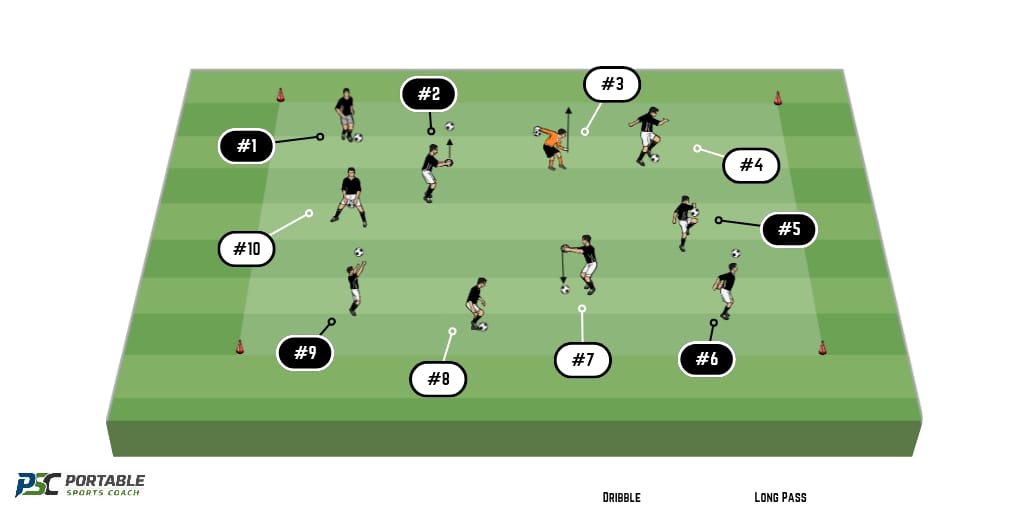
Focuses on helping players become more confident and comfortable with the ball at their feet. U6 players can begin experimenting with different movements, turns and changes of direction.
Dribble Gates
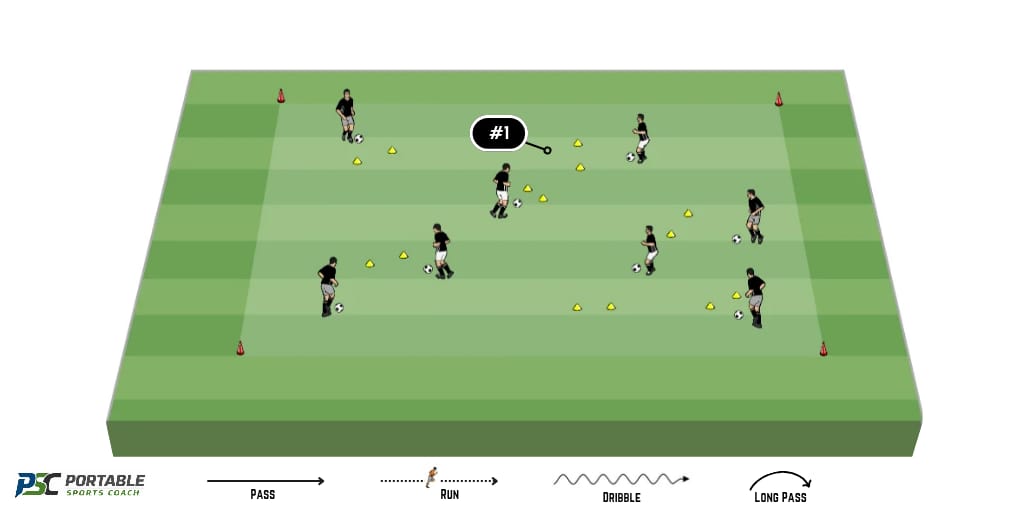
Encourages players to dribble with greater control while navigating through different gates. The simple challenge helps develop coordination, awareness and confidence on the ball.
X-Dribble
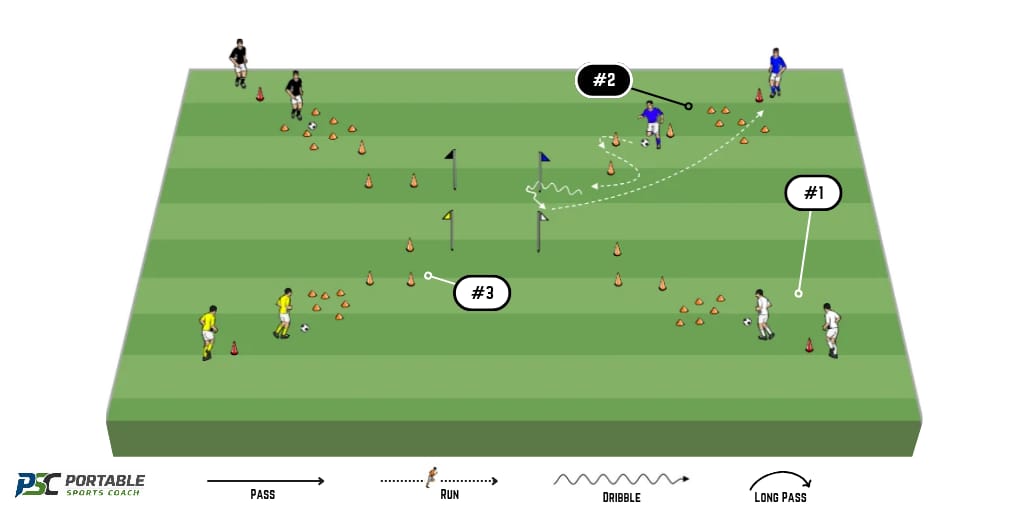
Helps players improve their ability to change direction while maintaining possession. U6 players can begin focusing on sharper turns and better ball control.
Steal
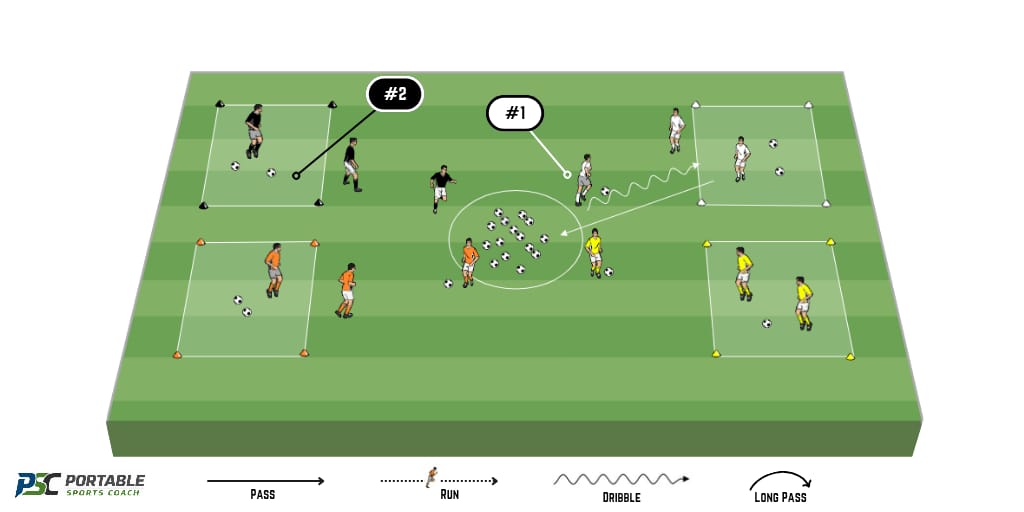
Introduces competition while encouraging players to protect possession of their ball. The activity develops awareness and confidence in game-like situations.
Clean Your Bedroom
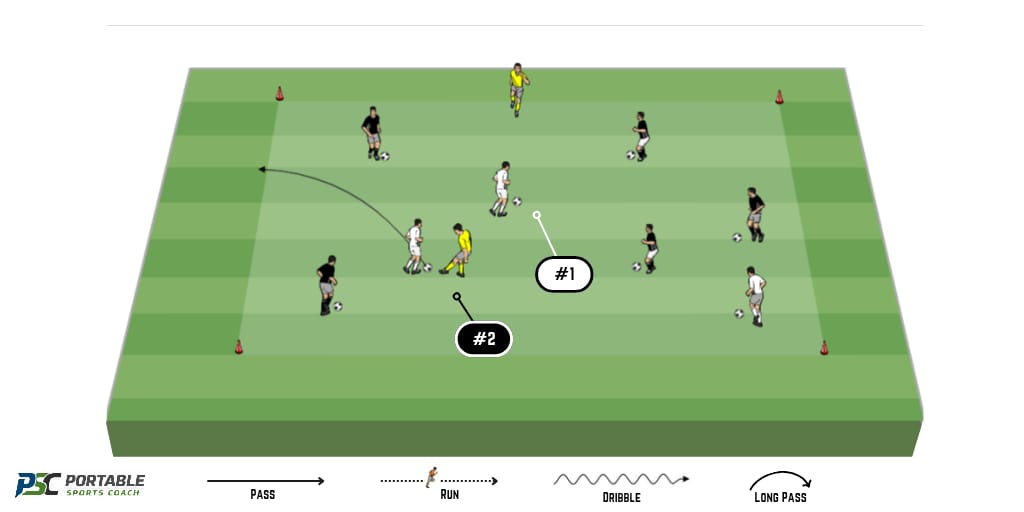
Combines lots of touches with movement and excitement. The simple objective keeps players engaged while developing confidence and coordination.
Numbers
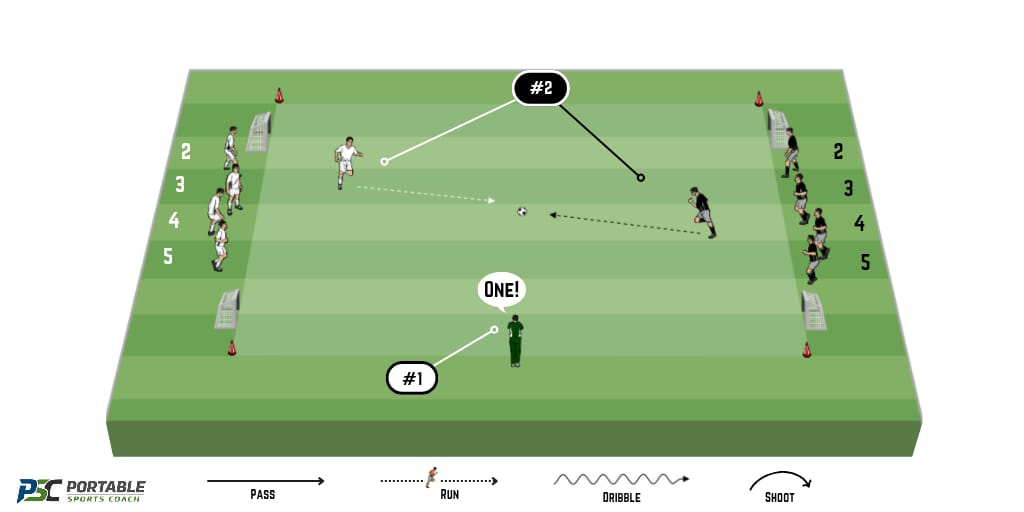
Develops listening skills, reactions and basic competition in a fun environment. U6 players learn to respond quickly while remaining focused on the activity.
Bowling Wars
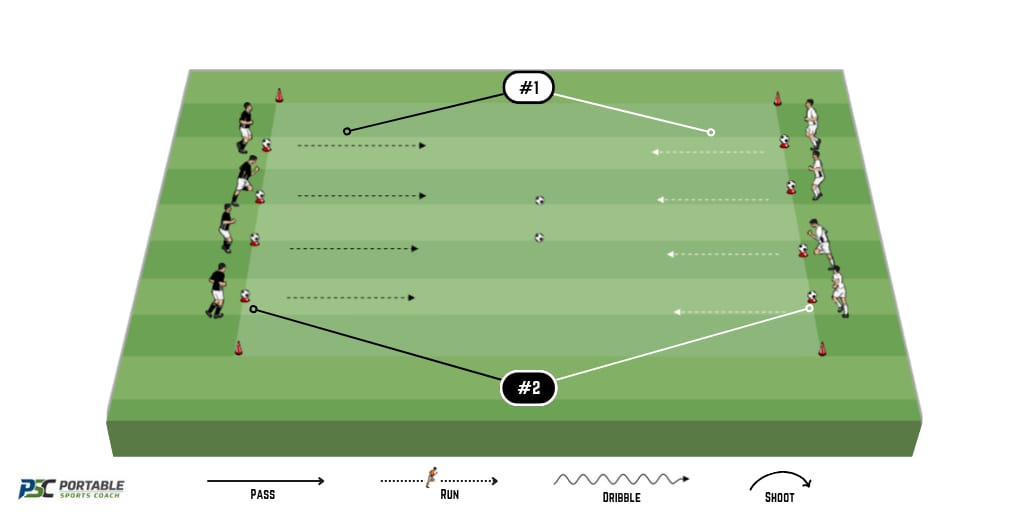
Introduces passing, accuracy and teamwork through a fun competitive activity. U6 players begin learning to work with teammates while developing basic ball striking skills.
Fox Tails
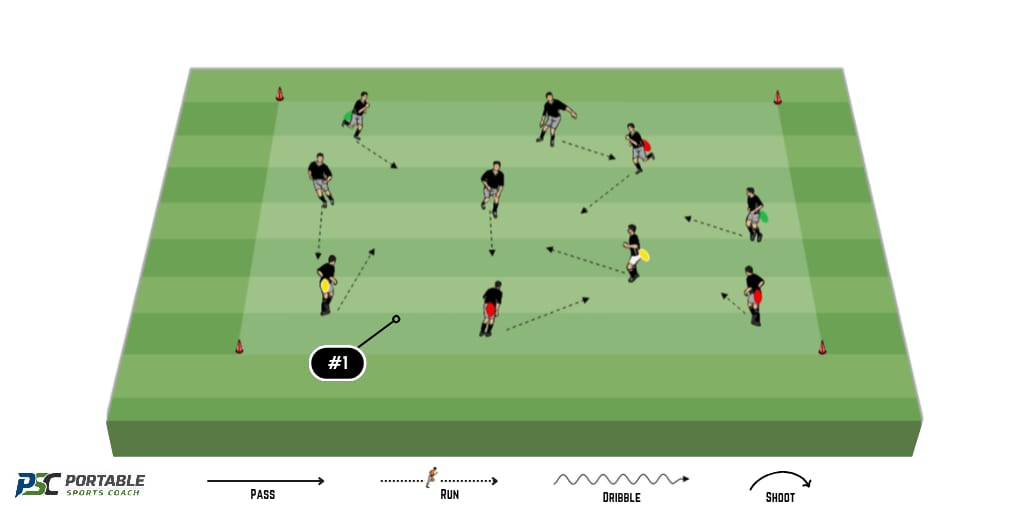
Encourages dribbling, awareness and quick reactions in a highly engaging game. The competitive element helps keep players active while building confidence on the ball.
Handball
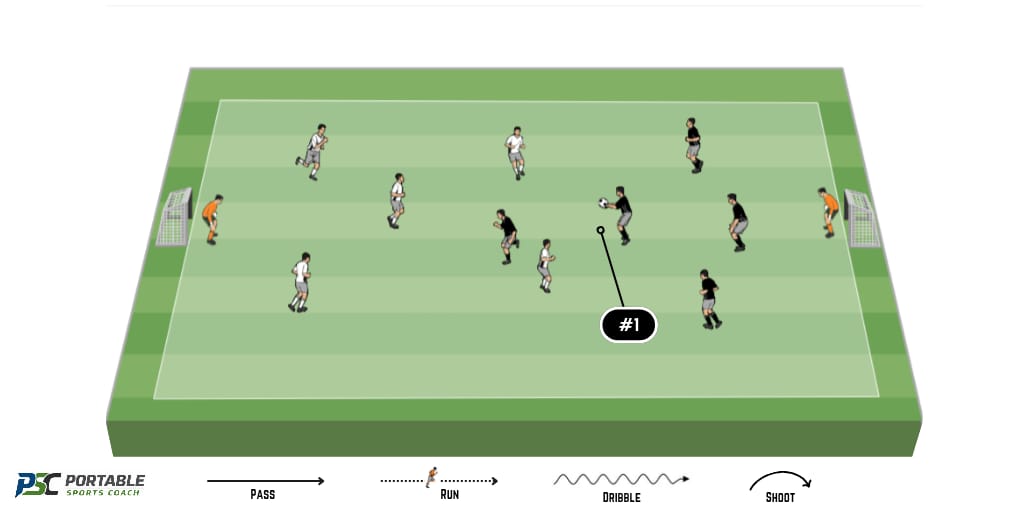
Introduces movement, teamwork and decision-making in a simple game format. It helps players understand space and cooperation before progressing to soccer-specific concepts.
Killer Ball
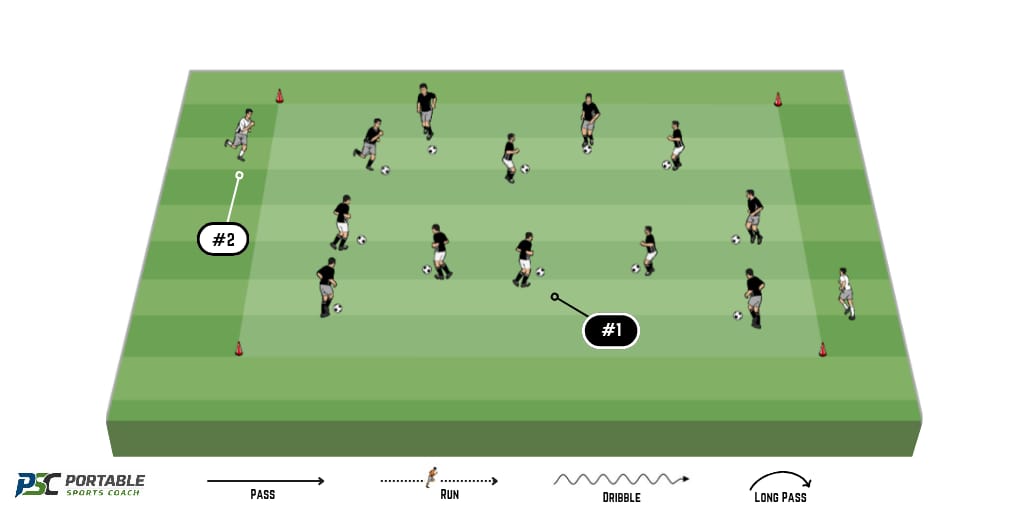
Introduces passing accuracy and timing through a simple target-based challenge. U6 players begin learning how to play purposeful passes while developing awareness of teammates and space.
What Should U6 Soccer Players Be Learning?
At the U6 level, players are beginning to develop greater confidence with the ball and a better understanding of how soccer games work. While individual ball control remains important, coaches can start introducing simple competition, teamwork and decision-making activities.
Training sessions should focus on:
- Dribbling and ball control
- Changing direction with the ball
- Awareness of teammates and opponents
- Basic passing and receiving skills
- Confidence in game-like situations
The goal is still development rather than results. Players should leave each session feeling successful, excited and eager to keep improving.
How Long Should U6 Soccer Drills Last?
U6 players can typically stay focused for slightly longer than younger age groups, but training sessions should still move at a fast pace.
Most drills work best when they are kept short, engaging and active. If players are standing around waiting or becoming distracted, it’s usually time to move on to a new activity.
As a general guideline:
- Technical drills can last 5-10 minutes
- Competitive games often work best for 5-8 minutes
- High-energy activities may only need 3-5 minutes
Keeping sessions varied helps maintain concentration and ensures players stay involved throughout training.
Common U6 Coaching Mistakes
One of the biggest mistakes coaches make at the U6 level is trying to progress too quickly. While players are becoming more capable, they are still learning the fundamentals of movement, coordination and ball control.
Some common mistakes include:
- Introducing tactics too early
- Spending too much time talking
- Creating long waiting lines
- Focusing on winning instead of development
- Using drills that are too complex
The most effective U6 coaches keep instructions simple, create plenty of opportunities for ball touches and allow players to learn through repetition and play.
If players are active, engaged and having fun, the session is usually heading in the right direction.