
Goalkeepers have one of the most unique roles on the soccer field. They must be able to make saves, command their penalty area, react quickly under pressure, and increasingly contribute when their team is in possession.
While goalkeeper-specific training is important, young goalkeepers should still spend plenty of time training alongside outfield players. Modern goalkeepers are expected to be comfortable with the ball at their feet, distribute effectively, and understand the game beyond simply stopping shots.
The goalkeeper drills below are organised by the specific skills they help improve, making it easy to find the right activity for your players, session objectives, and age group.
What Goalkeeper Drills Improve
- Handling & Technique: Develop safe catching techniques, shot stopping fundamentals, and confidence when dealing with the ball.
- Positioning & Footwork: Improve movement, balance, angles, and the ability to get into the correct position before making saves.
- Reaction & Awareness: Develop concentration, decision-making, and the ability to react quickly to changing situations.
- 1v1 Goalkeeping: Improve confidence when closing down attackers and dealing with breakaways.
- Distribution & Communication: Encourage goalkeepers to start attacks, communicate effectively, and support their team in possession.
Table of Contents
- Technical Warm Up
- Soccer Rebounder Goalie Drills
- Gates
- Close The Angles
- Command React
- Quick Reflexes
- Protect Your Box
- Not In My Box
- 4 Goal
Goalkeeper Fundamentals
Technical Warm Up
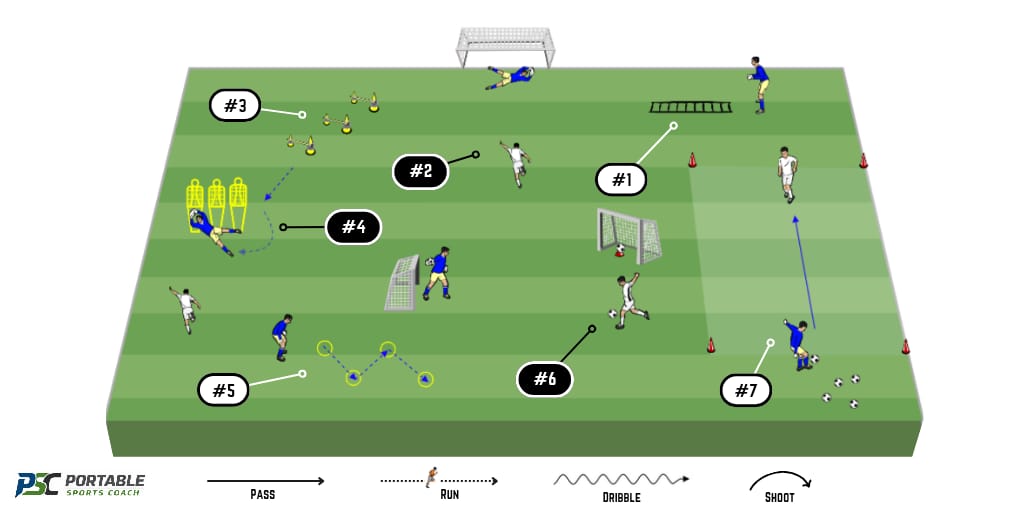
- Objective
- Prepare goalkeepers physically and technically for training while developing handling, footwork, distribution, and 1v1 skills.
- How It Works
- Goalkeepers work through a continuous circuit consisting of multiple stations. Activities may include footwork ladders, hurdles, agility hoops, handling exercises, distribution targets, and 1v1 situations. Each station focuses on a different aspect of goalkeeping while gradually increasing the intensity of the session.
- Coaching Focus
- Stay balanced and on the balls of your feet
- Get into position before making the save
- Keep your eyes on the ball throughout the action
- Use good handling technique when catching
- Recover quickly and prepare for the next action
- Progression
- Increase the difficulty of the movement patterns or vary the speed, height, and angle of the shots being served to the goalkeeper.
Soccer Rebounder Goalie Drills
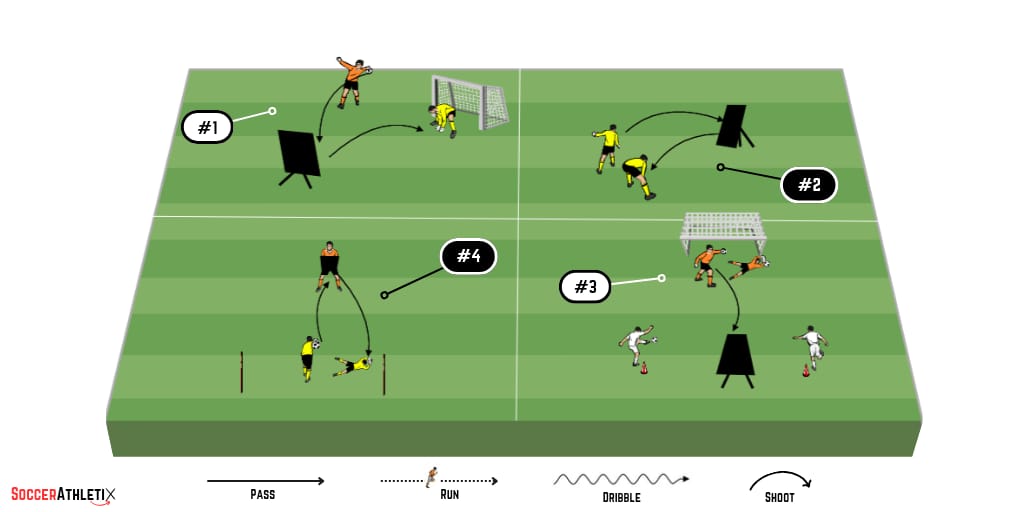
- Objective: Improve handling, footwork, reactions, and goalkeeper decision-making.
- How It Works
- Goalkeepers use a rebounder to create repeated save situations. The unpredictable returns force keepers to adjust their positioning, react quickly, and secure the ball under pressure.
- Coaching Focus
- Stay balanced and ready
- Move your feet before making the save
- Keep your eyes on the ball
- Get your body behind the ball
- Recover quickly for the next action
- Progression
- Use an unpredictable rebound surface to increase reaction speed and decision-making demands.
Positioning & Movement
Gates
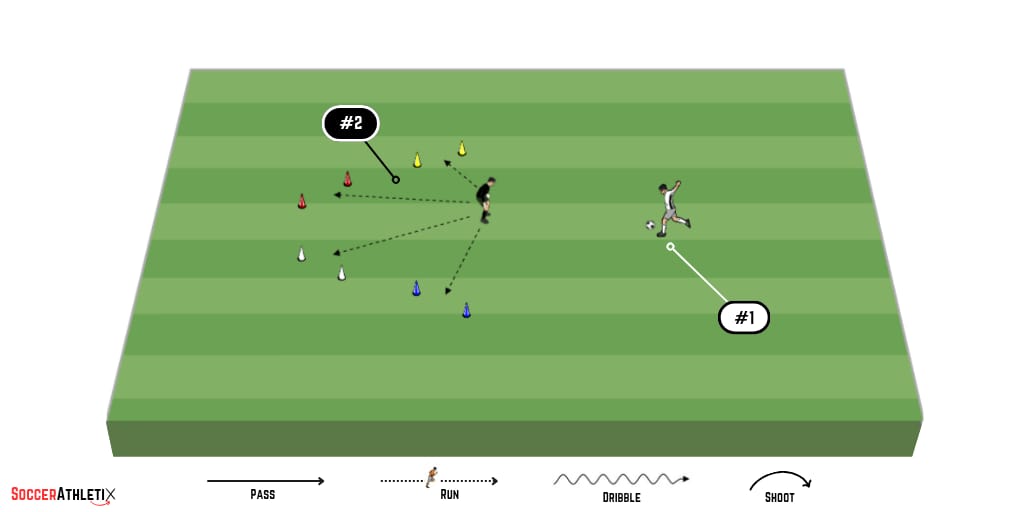
- Objective: Improve positioning, footwork, and reaction speed when moving across the goal.
- How It Works
- The goalkeeper starts in the centre and reacts to a colour called by the coach. After moving through the correct gate, the goalkeeper must quickly get set and make the save before recovering back to the starting position.
- Coaching Focus
- Stay on your toes and ready to move
- Move quickly to the target area
- Keep your body facing the ball
- Get set before the shot
- Recover quickly after each save
- Progression
- Call opposite colours to increase decision-making and reaction speed.
Close The Angles
- Objective: Improve positioning, footwork, distribution, and the ability to narrow shooting angles.
- How It Works
- Attackers take turns shooting on goal while the goalkeeper adjusts their position based on the location of the ball. After making the save, the goalkeeper must quickly distribute the ball to a target before preparing for the next shot.
- Coaching Focus
- Stay aligned with the ball
- Narrow the shooting angle
- Get set before the shot
- Move your feet into position
- Distribute accurately after making the save
- Progression
- Add pressure from the attacker after the shot to challenge the goalkeeper’s distribution.
Reaction & Awareness
Command React
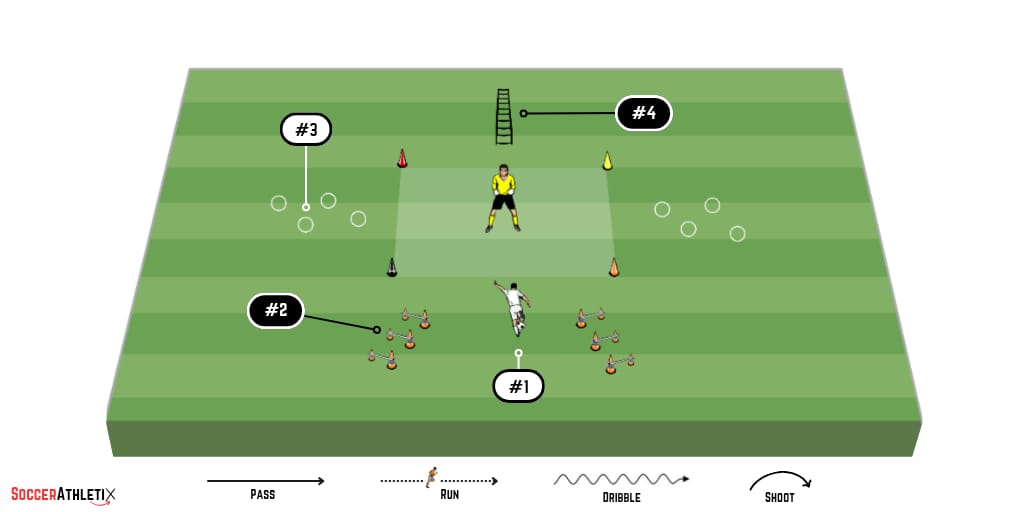
- Objective: Improve reaction speed, footwork, and the ability to make saves under pressure.
- How It Works
- The goalkeeper starts in the centre of a coloured grid. On the coach’s call, they must move quickly to the correct marker, recover their position, and react in time to make the save.
- Coaching Focus
- React quickly to the coach’s call
- Stay facing the ball at all times
- Get set before the shot
- Keep hands ready and in front of the body
- Recover quickly after each save
- Progression
- Call opposite colours to increase decision-making difficulty.
Quick Reflexes
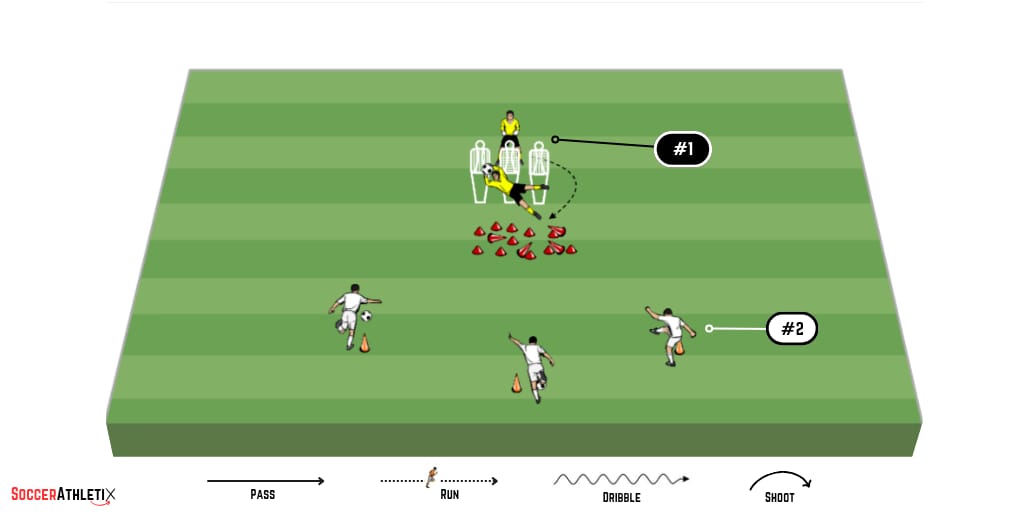
- Objective: Improve reactions, awareness, and the ability to deal with unpredictable situations.
- How It Works
- The goalkeeper must move around obstacles before reacting to a shot from one of several servers. Because the goalkeeper does not know where the ball will come from, they must stay alert and adjust quickly to make the save.
- Coaching Focus
- Stay focused on the ball
- Move quickly into position
- React to late changes in direction
- Keep your body behind the ball
- Recover quickly for the next action
- Progression
- Use different ball types to create varied and unpredictable rebounds.
Handling & Ball Control
Protect Your Box
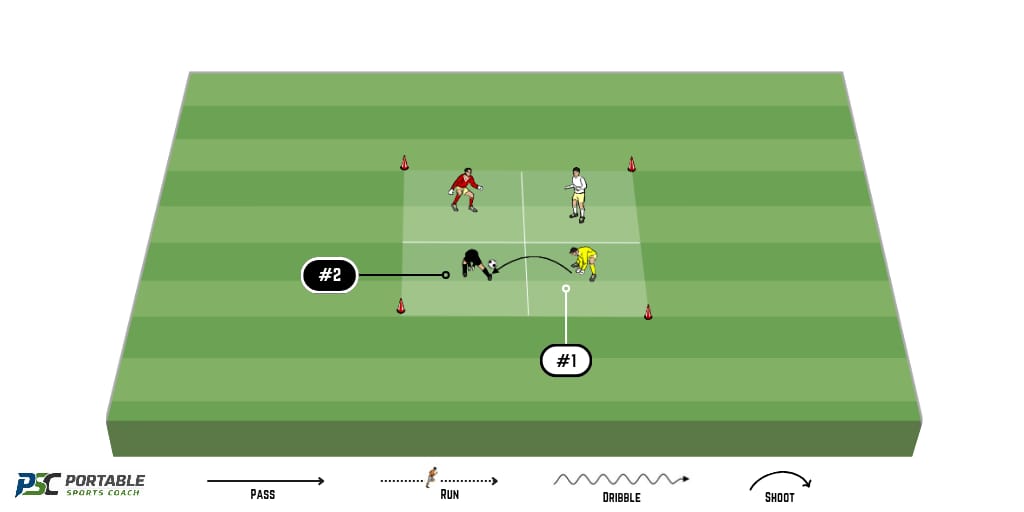
- Objective:Improve handling, reactions, awareness, and the ability to control the ball under pressure.
- How It Works
- Goalkeepers are positioned in separate sections of a grid and serve the ball to one another using underarm throws or volleys. Players must read the flight and bounce of the ball before controlling it and directing it into another player’s area. Goalkeepers lose points if the ball bounces twice or leaves the playing area.
- Coaching Focus
- Read the flight of the ball early
- Get your body into position
- Control the ball with soft hands
- Stay aware of opponents and space
- Direct the ball away from pressure
- Progression
- Use different types of balls to create varied bounces and flight paths.
1v1 Goalkeeping
Not In My Box
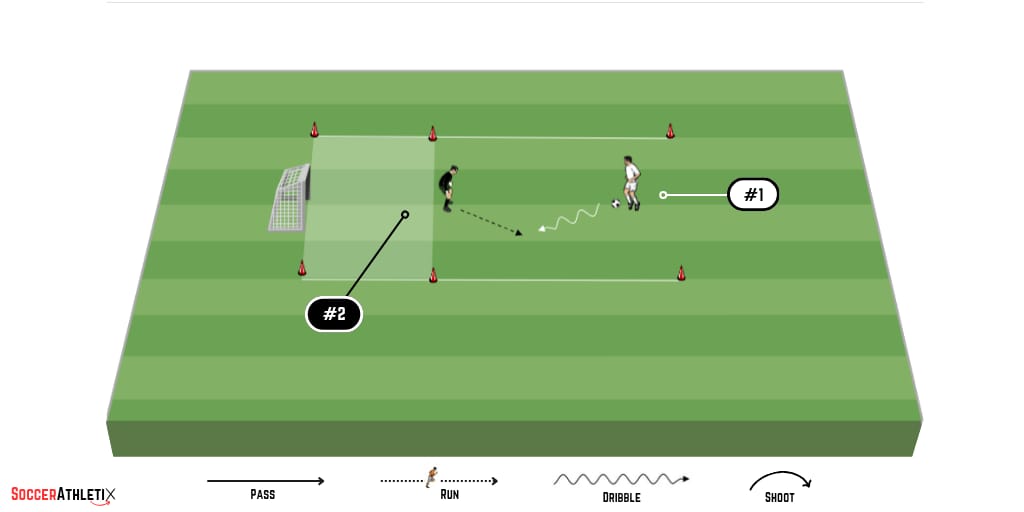
- Objective: Improve 1v1 goalkeeping, decision-making, and the ability to close down attackers.
- How It Works
- The goalkeeper starts by playing the ball to the attacker before quickly closing the space. The attacker attempts to dribble into the target area, while the goalkeeper must narrow the angle, delay the attack, and prevent them from reaching the scoring zone.
- Coaching Focus
- Close down space quickly
- Stay patient and avoid diving in
- Make your body as big as possible
- Force attackers away from goal
- Stay focused on the ball
- Progression
- Allow the attacker to shoot at goal instead of dribbling into the target area.
Competitive Goalkeeping Games
4 Goal
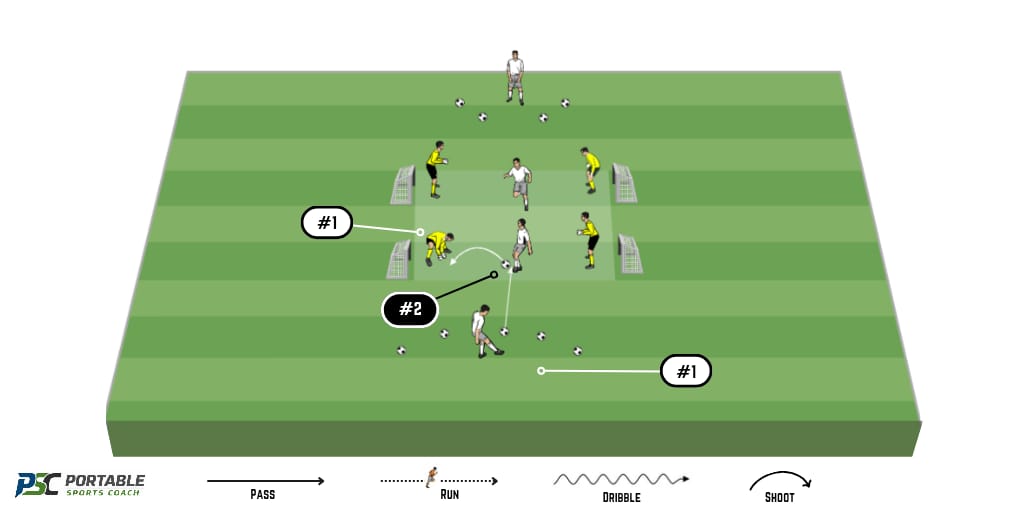
- Objective: Improve reactions, awareness, and shot-stopping under pressure.
- How It Works
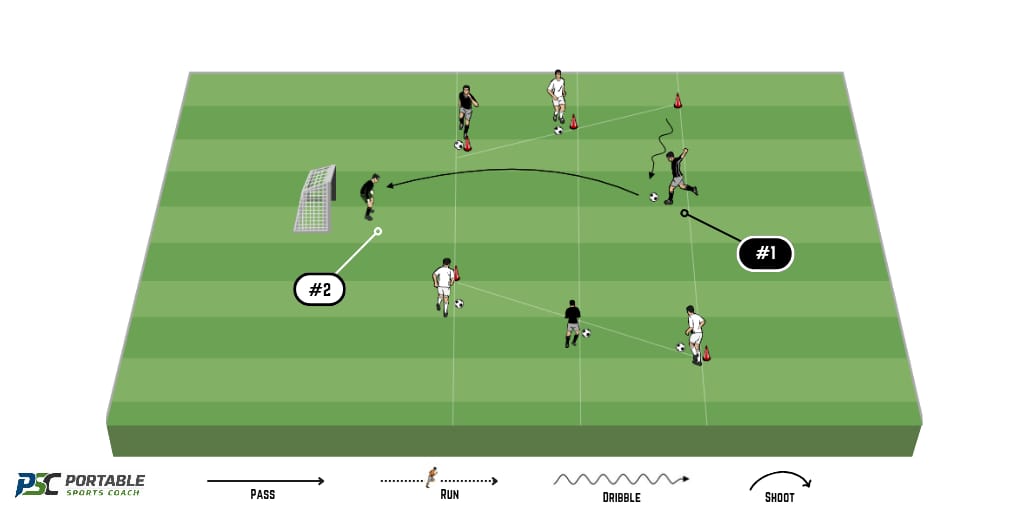
- Multiple goalkeepers defend separate goals while attackers attempt to create scoring opportunities. Goalkeepers must stay alert, react quickly to shots from different angles, and prepare immediately for the next action.
- Coaching Focus
- Stay on your toes
- Get set before the shot
- React quickly to changing situations
- Stay aware of where attacks are developing
- Recover quickly after each save
- Progression
- Increase the speed at which balls are served into the practice.
Frequently Asked Questions
What age group are these passing and receiving drills suitable for?
Most of the drills on this page can be adapted for a wide range of age groups, from U6 players learning the fundamentals to older players working on possession, awareness, and decision-making.
How often should soccer passing drills be used in training?
Passing and receiving activities should be included in almost every training session. They help players develop technical consistency, improve possession, and become more confident on the ball.
What is the best soccer passing drill for beginners?
Simple passing exercises that focus on first touch, accuracy, and movement are usually the best starting point. As players improve, coaches can introduce more pressure, decision-making, and game-realistic scenarios.
Related Age Group Drills
Goalkeeper training changes significantly as players mature. Browse the collections below to find goalkeeper drills tailored to different age groups and skill levels.